


 Free Newsletter

NY appeals court reinstates criminal charges
Bennett Loudon//July 2, 2026//


A New York state appellate court has reinstated an indictment that had been dismissed because of a supposed violation of discovery rules.
Defendant Jonathan L. Smith was indicted on charges of first-degree disseminating indecent material to minors, and endangering the welfare of a child.
In December 2024, Erie County Court Judge Suzanne Maxwell Barnes granted a defense motion to dismiss the indictment.
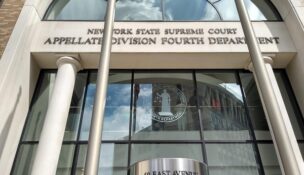
The Erie County District Attorney’s office appealed that ruling and the Appellate Division of state Supreme Court, Fourth Department, unanimously reversed Barnes’ decision and reinstated the indictment.
As part of their discovery obligations, the prosecution turned over to the defense screenshots of text messages between Smith and the complainant that the prosecution had in their possession.
Just before the start of the trial, the prosecution learned from the complainant that, before taking the screenshots, she had deleted some of the text messages between her and Smith, according to the decision.
The prosecution promptly notified defense counsel of the deleted messages, but Smith’s attorney moved for dismissal of the indictment or, preclusion of all the text messages, and any reference to them as a discovery sanction.
Barnes found that the prosecution did not exercise due diligence or make reasonable efforts to discover the deleted messages and that the belated discovery warranted a sanction. She initially imposed the sanction of preclusion but dismissed the indictment after reargument.
Under Criminal Procedure Law 245.80 (1) (b), when material or information is discoverable, but cannot be disclosed because it has been lost or destroyed, “the court shall impose an appropriate remedy or sanction if the party entitled to disclosure shows that the lost or destroyed material may have contained some information relevant to a contested issue,” the Fourth Department wrote.
CPL 245.20 requires the prosecution to turn over certain material and information “in the possession, custody or control of the prosecution or persons under the prosecution’s direction or control,” the court noted.
In Smith’s case the prosecution established that the deleted text messages did not meet the possessory prong of CPL 245.20, the Fourth Department ruled.
Because the records were not in the possession, custody or control of the prosecution, or in the possession, custody or control of persons under the prosecution’s direction or control the records were not part of the required discovery, and the prosecution was not required to make a diligent, good faith effort to ascertain the existence of the text messages, the panel ruled.
“The People did not violate their continuing obligation to ascertain the existence of discovery material. Once the People discovered that certain text messages had been deleted, they promptly notified defense counsel,” the panel ruled.
“We agree with the People that they did not violate their discovery obligations and that the court thus erred in granting the motion insofar as it sought the imposition of a sanction,” the court found.
[email protected] / (585) 232-2035
Related Articles
Related Articles
Related Content





Case Digests
- Fourth Department – Child neglect: Matter of De’Lawrence S. III
- Court of Appeals – Missing witness instruction: People v. Khiamdavanh
- Second Circuit – Securities fraud: Huey v. Anavex Life Sciences Corp.
- Fourth Department – Probation conditions violations: People v. Relyea
- Fourth Department – Ineffective assistance of counsel: People v. Remington
- Court of Appeals – Substitution of counsel: People v. Kelley
- Fourth Department – Due process: People v. Pulley
- Court of Appeals – Equitable estoppel: Incorporated Village of Freeport v. Freeport Plaza West LLC
- Court of Appeals – Ineffective assistance of counsel: People v. Guerra
- Second Circuit – Death results clause: United States v. Parks
- Fourth Department – Suppression: People v. Post


Law News
- NY appeals court reinstates criminal charges
- Cybersecurity requires strategy, culture and vigilance, local experts advise
- Gun conviction reversed over illegal search
- NY appeals court grants new trial for defendant who attacked RPD officer
- NY appeals court reinstates attempted murder charge
- Harris Beach Murtha adds Boston firm Peabody & Arnold
- Attorney and law firm sanctioned for AI mistakes in court filing
- New rule requires NY judges to visit detention sites
Polls
 Loading ...